


An upholstered chair, as a smaller version of an upholstered armchair, makes sitting more comfortable. The upholstery of the seat and backrest makes sitting more pleasant, and even longer waiting times can be comfortably "sat through." Due to the relatively narrow design of an upholstered chair compared to an upholstered armchair, the chair can also be easily used in smaller rooms and with less floor space, and can also be pushed under a table.
What are the advantages of an upholstered chair?
An upholstered chair is comfortable to sit in – the upholstery is pleasantly soft, but you don't "sink" into it, allowing for longer "sittings" without feeling uncomfortable or having back pain.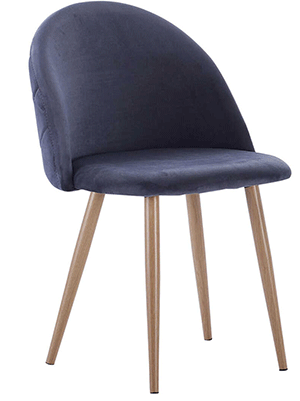
Upholstered chairs are versatile. Due to their narrower design compared to an upholstered armchair, the chair can be used both at the dining table and in smaller rooms. Seating areas with two or three upholstered chairs and a smaller coffee table or side table fit well in living rooms as well as in waiting areas of car dealerships, workshops, and other businesses, without taking up too much space.
For waiting rooms and waiting areas in general, upholstered chairs are the first choice to make waiting more comfortable and to make the waiting time more pleasant for visitors and customers.
In the office, upholstered chairs can be used at meeting tables, as seating in conference rooms, and in bars, cafés, lounge areas, and hotel lobbies as communication islands and social gathering points together with a beautiful table.
What should you consider when choosing an upholstered chair?
Depending on the use and location, different chair models are suitable.
At the dining table, one would typically use a chair without armrests to avoid restricting freedom of movement and to be able to push the chair under the table without problems. The same applies to waiting areas where reading material is provided to users and a table may be offered for placing magazines, a drink, or a smartphone. An armrest would also restrict freedom of movement here, and the available space could only be equipped with fewer chairs.
In private homes, bars, or lounges, there is no objection to a somewhat more unusual shape and color for the upholstered chair, for example, with an extended backrest, a special design form, or even more unusual colors for the upholstery and frame. Here, personal taste, the general furnishing style, and individual preferences are decisive.
To keep the maintenance of an upholstered chair as low as possible, attention should primarily be paid to the textiles used for the upholstery. Most fabrics can be vacuumed with a vacuum cleaner with an upholstery brush attachment or a handheld vacuum cleaner; with velvet, one should only pay attention to the nap direction and always vacuum in the same direction. Stains can be carefully blotted with a cloth with lukewarm water without rubbing too hard. Leather upholstered chairs are best cared for with a special leather care product, and artificial leather chairs with a suitable care product or a mild soap solution. For wooden legs, scratches and scuffs can be removed by sanding; the legs may then need to be re-glazed, oiled, or varnished.


