


Which interior design styles suit me and my home? The more choices you have, the harder it is to choose. This applies to everyday life just as much as to furnishing your home or office, because there are several distinct interior design styles. Ultimately, personal taste dictates which style one prefers, and there's no need to slavishly adhere to design guidelines.
An important consideration is: Which interior design style do I like and which suits me, my lifestyle, and my way of working? Above all: Which style do I feel comfortable with, which radiates harmony and isn't just there to impress guests?
What you should try to avoid when furnishing is mixing different interior design styles in one room. However, a mix of styles can, of course, also be a very conscious combination, creating your own personal oasis of well-being.
Below, we have compiled some current styles. There are often overlaps in both the furniture and design elements used, as well as in the definition of the terms themselves – so please understand this as a rough guide.
The most popular interior design styles today are:
- Minimalist Style
- Scandinavian – Scandic Style
- Industrial – Industrial Style
- Urban Style
- Modern Interior Design Style
- Country House Style
- Vintage and Shabby Chic
- Rustic Style
- Extravagant Designer Style
Minimalist Style: Reduction to the Essential
Restrained colors, clear surfaces, pragmatic materials, and functional furniture. Form, color, and structure of fewer central elements – the minimalist style eschews excessive decoration and luxurious trinkets – here, the name says it all. Natural elements like light, beautiful materials, and generous spaces are important in this style. Simplicity triumphs over elaborate details.
Furniture and subtle decor should combine to form a harmonious overall picture. Clear surfaces, smooth finishes, bare walls with a single piece of art, no embellishments, and a uniform color palette of white, beige, and gray tones, possibly color nuances in light watercolor shades – that's all the minimalist style needs.
Scandinavian Decor – Scandic Style: Natural, Casual, Bright
The Scandinavian interior design style is not too far from the minimalist style but is complemented by natural materials such as wood and natural textile elements. Reduced design language, wooden floors and furniture, light natural tones and pastel colors – light woods combined with a white or limewashed finish, colorful textiles as conscious splashes of color, and geometric shapes in black and white characterize the Scandic Style.
Materials are predominantly wood, leather, wool, linen, with simple furniture designs without extravagant frills.
Industrial Style – Industrial Elements as a Conscious Style
The industrial style thrives on metallic colors and concrete aesthetics. Walls in raw concrete, unplastered brick walls or brick walls that look as if the 'plaster has long fallen off,' large glass windows with metal frames, exposed steel beams, raw wooden beams, furniture with influences from industrial production featuring cogs, wrought iron frames, dining tables with heavy metal frames, lamps without lampshades... these are all elements to create an industrial feel in a room. Add a leather sofa or individual armchairs with a heavy look – the epitome of the Industrial Style is the industrial loft that looks as if production has just moved out.
Urban Style: Redefining inner-city living
The urban living style combines elements of various design types into a style for inner-city living. Urban design is softer and looks more comfortable than the Industrial Style. It ideally suits former warehouses and lofts with large window areas or skylights.
Functional and practical living areas, exposed wooden or metal beams, and unfinished surfaces, materials like concrete, brick, and wood define the Urban Style. The mix of styles is characterized by clear, open spaces, bright colors on a neutral base combined with natural tones, clean surfaces, and minimalist furniture with sleek lines. Vintage decor and geometric designs, both on surfaces and furniture, fit very well with the urban style.
Modern Interior Design Style: Simple, Clear, Open
Modern interior design uses furniture with simple form and function, natural materials such as wood, leather, glass, and stone, and a warm color palette. Drawing on minimalist and Scandinavian interior design styles, simplicity, functionality, and clean lines are the hallmarks to create inviting spaces. Superfluous elements, embellishments, and elaborate design are avoided.
Furniture should be placed spaciously to avoid a feeling of confinement and clutter. Furniture pieces in the modern interior design style are usually low and horizontally oriented, following clean lines without many curves and complicated details.
In terms of colors, neutral and strong, vibrant surfaces can complement each other; black-and-white contrasts and geometric shapes are also permitted in the Modern Style.
Country House Style: Classic and Elegant at the same time
Cozy furnishings with rustic wooden furniture, natural materials, and feminine, playful decoration are elements of the country house style. It originated in the 17th century in the countryside, where wealthy families furnished their homes comfortably and enjoyed an idyllic rural life.
Solid wood furniture such as a rustic live edge table or farmhouse furniture with carvings and turned ornaments, flower vases, lace doilies, chair covers, cushions, and floral patterns on textiles and walls characterize the cheerful country house style. The color palette is vibrant in strong or pastel tones. Natural materials such as wood, rattan, stone, ceramics, and clay, cotton, linen, and leather are the materials for the country house style and convey naturalness.
Vintage: Classic Vintage, Mid-Century Vintage, Shabby Chic, Industrial Style-Vintage
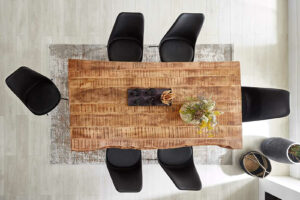 Vintage is an interior design style with various directions that can look quite different. What all vintage styles have in common, however, is a focus on an authentic look. The furniture should at least appear as if it has been around for many years, or should truly be used and show it. Scratches, worn areas, faded colors, and signs of use are essential – if you don't want to resort to new furniture with a used look, you'll find what you're looking for at flea markets, second-hand stores, designer shops, auction houses, or private sales, but you should allow some time for furnishing.
Materials are dominated by wood, metal, and glass, leather, and velvet. Natural colors combined with bold colors or pastel colors, depending on the vintage style, complete the look.
Classic vintage features a lot of wood and calm colors, mid-century vintage comes with bold colors and leather, velvet, and opulent lighting, shabby chic uses light wooden furniture, linen, and pastel colors, while industrial style vintage is dominated by cool materials like metal or glass.
Important with the different vintage styles: Please do not mix them!
Rustic Style: Natural, Rough, and Casual
Rustic interior design is characterized by naturalness, maturity, roughness, and casualness. Here again, various styles are represented, such as coastal style, country house style, and modern styles. Originally, the rustic style was heavy and dark, as objects came directly from nature and were repurposed or newly built. However, the new modern rustic style is light and airy.
An important element in rustic interior design is weathered, raw wood, as seen in rough wood furniture and picked up in ceiling beams and wood paneling.
To prevent rooms from appearing too heavy, light and white colors should be combined, and textiles made of linen, cotton, or wool should be used. Floor coverings are usually wood, tile, or stone, with rugs made of sisal, jute, or seagrass.
Extravagant Designer Style: Luxurious, Classy, Royal
Glass, velvet, satin, and luxurious designer furniture, but without exaggerated opulence. In the extravagant design style, you ultimately want to feel comfortable yourself and not just impress guests. Therefore, the glamorous touch should be combined with fine textiles, glossy surfaces, and clean lines, noble colors like gold, rosé to violet, gray, beige, and animal print patterns. Almost anything is allowed, but it should not appear excessively garish. For decoration, copper, brass, or gold-colored objects play a major role, while crystal chandeliers and ornate patterns on cushions and textiles complete the overall look.


